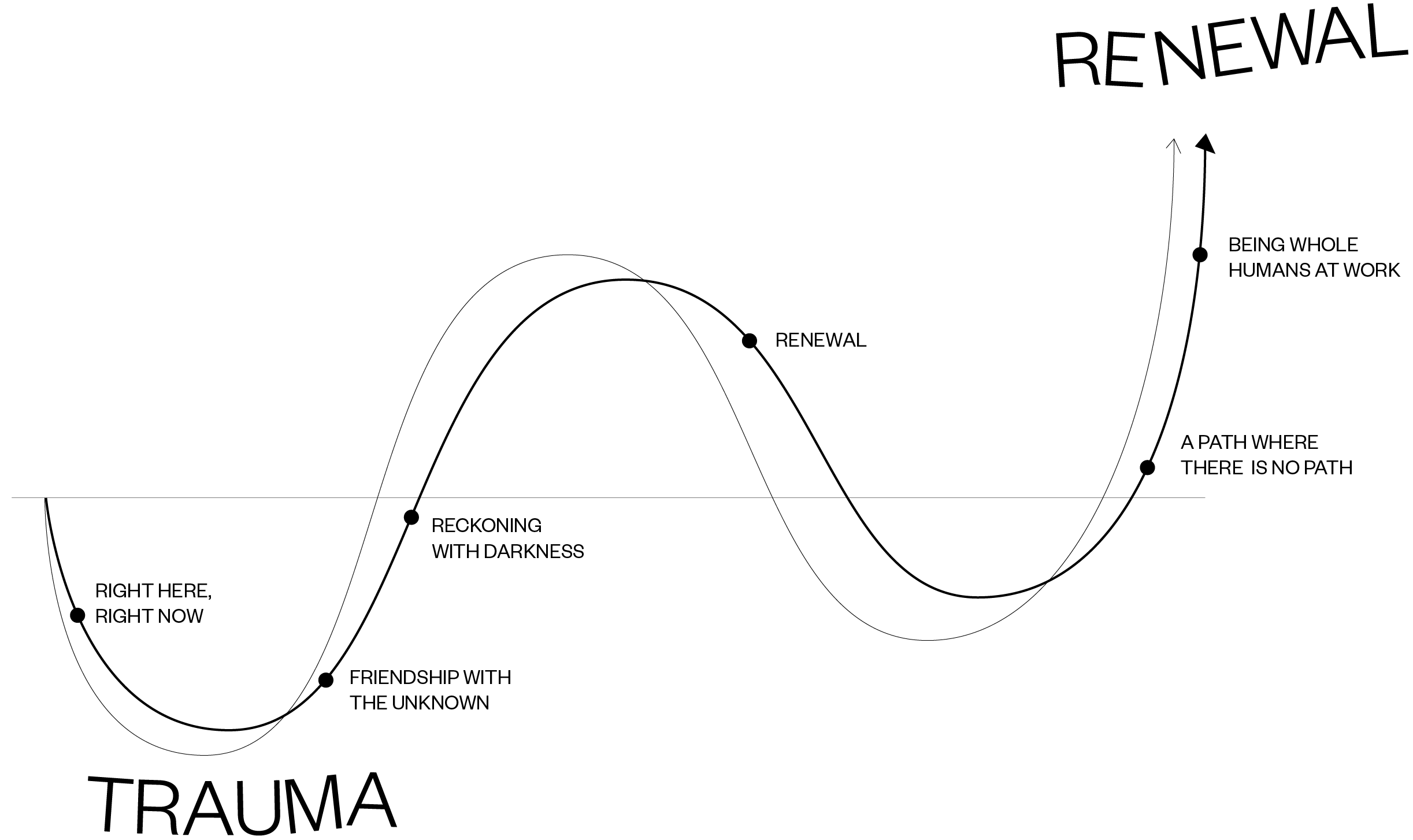
A PATH WHERE THERE IS NO PATH

Key Ideas



In brief:
The ideas from Session 5

The world is swept in grief. From Covid-19. From the second dagger: Unemployment. From the loss of life to this virus. From the cracks and fissures that have been blown wide open in the wake of the virus. And then the violent killings of Black citizen—that expose fully the centuries-long racism of many of the United States’ systems and institutions. This session meets us each where we are, to listen deeply to Black voices, and to begin to summon the moral imagination to build new systems.

Comments and ideas? Email us.


Ring Model = Engaging With
Love and Support

 
 
Ring_Theory_new_transparent.png

How do we begin?

The quality of our conversations—and the moral imagination that comes from them—will determine whether we can, in this moment, create a path where there seemingly is no path. A path that provides love and support to those at the center of the trauma. A path that fosters authentic listening. A path that creates the willingness and openness to be changed by the listening so that a deeper sense of accountability for change emerges from the conversations. The Ring Model be an instructive guide.

The Ring Model: An Instructive Model For Conversations
Deb Bubb


cosense.png


“Tackling racism requires a new level of co-sensing from us all. The point of co-sensing is not to project your own point of view, or what you are feeling, but rather to curiously seek to broaden your perspective, and to change based on what you hear, how you see the world, and your role in it,” explains Deb Bubb, Chief Leadership, Learning and Inclusion Officer at IBM. Co-sensing acknowledges the validity and reality of other’s perspectives and by doing so, creates a bigger, more informed container for your own thinking.”
How Best to Co-Sense in Ring Theory
Deb Bubb


beautiful_questions.png


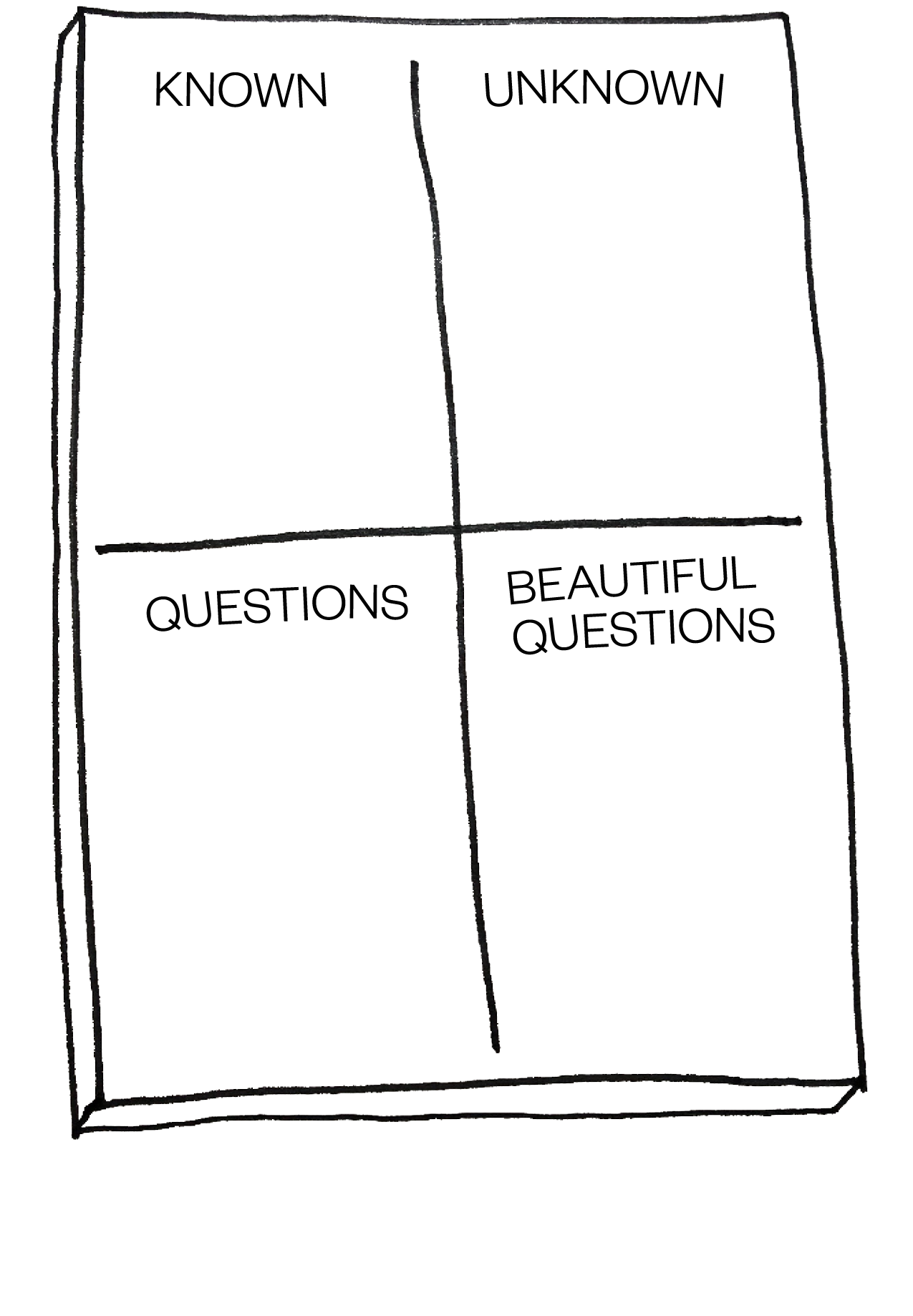
Deb Bubb on using the beautiful question to enable deeper listening in conversation on race—and on how to stay attentive in conversations.

Beautiful Questions That Enable Deep Listening
Deb Bubb
How to Stay Attentive In Conversations
Deb Bubb
 
container.png

Fruitful ways to use what we learn from our conversations: Changing our container, identifying action, educating, and creating a system of support.

How to Make A Path Where There Is No Path
Deb Bubb
 

Learn other ways to change your container from Resmaa Menakem. “Put yourself in situations. If you’re a white person, go someplace where there are gonna be a lot of Black bodies, and just feel what happens in your body. And go back again.”


Using what we learn from conversations as fodder for systemic change.

How to Use What You Hear as Fodder for Systemic Change
Keith Yamashita


Comments and ideas? Email us.


Go deeper when…

…I’m afraid to start.

That’s okay. Get quiet first.

Take a sound bath with Sara Auster, a master meditation teacher
and the leading voice in Sound Bath experiences,
and member of This Human Moment’s community.

Comments and ideas? Email us.


 …I started new conversations. And they are working.

You tried out some of the rituals above to increase your ability to listen, reflect and change.
Here are other ways to make even more change.

Comments and ideas? Email us.


…I did these rituals. And, frankly, it went sideways.

The thing about renewal in difficult times is that we’ll make mistakes. But don’t let that be what stops you. It’s too important to quit.

What if it Goes Sideways?
Keith Yamashita

Comments and ideas? Email us.


  …I did it. And it was a #@!?-show.

Listen to this podcast, “Talking About Whiteness.

And, if you were moved by Denis Young Smith’s beautiful rendition of Fix Me Jesus, you might take in Alvin Ailey Dance Company’s performance of the same piece.

Comments and ideas? Email us.

 
05_APNP_Tools_BG.png

RENEWAL

Key Ideas


In brief:
The ideas from Session 4

We experience trauma when our shocking reality overwhelms our capacity of meaning-making. In every sense of that, we are in traumatic times. But there are things we can do to use this as a period of growth. We don’t have to settle for post-traumatic stress, we can aim for post-traumatic growth. We can aim for renewal.

We started with a Meditative Story about renewal.

The Ideas from Session 4: Renewal is a Choice
Keith Yamashita

Comments and ideas? Email us.


Ritual = Building Muscle


04_RN_6_circles.png

Fostering renewal.

This period is creating new pressures and fractures. It’s bubbling up old tensions and wounds. But it’s also offering a moment to pause, consider what’s essential, and seek a different kind of human flourishing on the other side. It starts by creating a ritual of seeing new possibility.

Renewal as a Practice
Keith Yamashita


Gayle Young Whyte explains it well, “Trauma happens when the intensity of reality overflows the container of meaning in our lives. The antidote? Create a larger container.” Here are some ideas how. It’s about the ritual of using challenge in our lives to build our capability of dealing with complexity.


04_RN_folded_sheet_3.png
 
 
Your Recipe for Renewal
Keith Yamashita
 
 
04_RN_folded_sheet_6.png


Mapping a Field of Possibility
Gayle Young Whyte
 
 
Self-Narrative: What Narrative is No Longer Serving You?
Gayle Young Whyte
What is Worth Renewing?
Keith Yamashita


Comments and ideas? Email us.


Go deeper when…

…I don’t believe renewal is possible for me.

That’s okay. Maybe you need to do a Big Vent first.

Renewal: But First, a Big Vent—On Yearnings
Gayle Young Whyte

Comments and ideas? Email us.


 …I did these rituals. And they are working.

You tried out some of the rituals above to increase your ability to deal with complexity, and they are working.
Here are other ways to foster renewal.

Comments and ideas? Email us.


…I did these rituals. And, frankly, it went sideways.

The thing about renewal: It comes and goes in waves.

Renewal is Not Linear
Keith Yamashita

Comments and ideas? Email us.


  …I did it. And it was a #@!?-show.

Excuse our French. It was just merde. Sometimes the best thing you can do is just nourish yourself. Listen to something to put your mind in a better space.

Here is some powerful slam poetry from Ashlee Haze to get you started. 

Comments and ideas? Email us.

 
Tools_BG_RN.png

RECKONING WITH DARKNESS

Key Ideas


In brief:
The ideas from Session 3

Guest Dan Harris said it well, “That thing you are feeling is grief.” In this session we explored it—and all its companions: Darkness, sadness, loss, rough times, sucky moments, anticipatory grief, and collective loss.

The Ideas from Session 3: Reckoning with Darkness
Keith Yamashita

Comments and ideas? Email us.


Ritual = Building Muscle


RWD_page.png

Full-bodied, open-hearted grief.

IDEO’s Shoshana Berger says it well, “We are not good at endings. A life well-lived is about practicing graceful endings.” We make some suggestions on small, daily ways you can be present with loss.

Building Capabilities to Sit with Loss
Keith Yamashita


Grief comes in waves, it revisits us—sneaking up on us when we least expect it, pulling us under when we are not looking. But to deny it, or push it away, is to push away a part of ourselves—doing so cheats ourselves out of human wholeness. So instead we build capacity to stay still enough, be forgiving enough, be loving enough to sit with it. Here are some approaches for that.


Full-bodied Feeling: A Meditation
Sebene Selassie
 
 
Remember Every Dark Period Can Build Capability
Gayle Young Whyte
 
 
Sitting in Love: A Visualization Ritual
Sebene Selassie
 
 
Endings into Beginnings
Keith Yamashita


For more meditative practices, please join Sebene Selassie and look toward 10 Percent Happier’s 3:00 P.M. ET daily meditation.
Comments and ideas? Email us.



Go deeper when…

…I didn’t even attempt the ritual.

That’s okay. Maybe you need to do a Big Vent first.

Sitting with Grief: But First, a Big Vent
Gayle Young Whyte

Comments and ideas? Email us.



 …I did it. And it worked.

You tried some ways to reckon with darkness. Perhaps make a ritual of it.

Here’s some advice from the community that attending this week’s This Human Moment.

Comments and ideas? Email us.



…I did it. And it went sideways.

There are some things peculiar to collective and ambiguous grief.

On Collective and Ambiguous Loss
Gayle Young Whyte

Comments and ideas? Email us.



  …I did it. And it was a #@!?-show.

Excuse our French. It was just merde. Sometimes the best thing you can do is just nourish yourself. Listen to something to put your mind in a better space. Here is a link to a spoken-word poem by Kate Tempest on Facebook.

Comments and ideas? Email us.

 
Tools_BG_RWD.png

FRIENDSHIP WITH THE UNKNOWN

Key Ideas


In brief:
The ideas from Session 2

In this time of change, we have to build a friendship with the unknown. Rather than spend all our energy fighting and resisting it, we can summon our curiosity, creativity, and strength to examine it.

This Human Moment: Session 2 ideas—in brief
Keith Yamashita

One of the powerful ideas we explored this week was the fact: In times of chaos, human beings, co-sense. Being skilled at co-sensing is one of the best means to renew your ability to find horizon in a time that seems very unstable.

Co-sensing: It's a natural act—and you can get better at it
Gayle Young Whyte

Questions, email us.


Ritual = Building Muscle


FWTU_Paper.png
 

Asking a more beautiful question: A daily ritual.

Each session of This Human Moment builds a habit or ritual to not just cope with this new landscape—but build the muscle you need to flourish on the other side. This one helps you build your ability to co-sense with others. It’s about formulating, asking, and living into beautiful questions.

A ritual: How to ask a more beautiful question
Keith Yamashita


There are several ways to make a question more beautiful. Here are some you might try in your day-to-day life:


A more beautiful question makes you listen in a different way.
Gayle Young Whyte
 
 
A more beautiful question helps you imagine the future.
Keith Yamashita
 
 
A more beautiful question helps you transform your perspective.
Keith Yamashita
 
 
A more beautiful question compels you to walk toward the unknown.
Gayle Young Whyte
 
 
A more beautiful question makes co-sensing and adventure.
Keith Yamashita

Questions, email us.


Go deeper when…

…I didn’t even attempt the ritual.

That’s okay. Maybe you have to vent first.

How-to: The Big Vent on How Things are Too Unknown
Gayle Young Whyte

Questions, email us.


 …I did it. And it worked.

You did your morning ritual, and you asked more beautiful questions about your day. Look here at The Top 53 Beautiful Questions you might want to try this week.

Questions, email us.


…I did it. And it went sideways.

What did you notice about why it went sideways?

Beautiful questions: What did you notice?
Gayle Young Whyte

Questions, email us.


  …I did it. And it was a #@!?-show.

Excuse our French. It was just merde. Sometimes the best thing you can do is just nourish yourself. Listen to something to put your mind in a better space. Here is a podcast interview of John O’donohue and Krista Tippett from The On Being Project.

Questions, email us.

 
Tools_BG_FWTU.png

RIGHT HERE, RIGHT NOW

Key Ideas


In brief:
The ideas from Session 1

In tumultuous times, we need to nourish ourselves and others. And we need to re-orient ourselves, our teams, and our company in this odd new landscape—that is about establishing grounding and horizon, both. One way to do that is to increase your power of noticing—and based on what you notice, live in to your roles and values more intentionally.

This Human Moment: Session 1 ideas—in brief
Keith Yamashita

Questions, email us.


Ritual = Building Muscle


RHRN_paper.png
 

A morning ritual.

Each session of This Human Moment will build a habit or ritual that can build the skills to cope with this new landscape—and build the muscle you need to flourish on the other side. This one helps you build your muscle of noticing—so you can better choose how to respond as your day unfolds.

Get aligned: Try this exercise
Keith Yamashita

Questions, email us.


Go deeper when…

…I didn’t even attempt the ritual.

That’s okay. The whole point of this is to build your muscle of noticing—rather than merely flinch-reacting. Notice why you didn’t attempt the ritual. Too tired? In a tough mood? Got distracted? All actually might be reason enough to attempt it tomorrow. (If that fails: Do a Big Vent.)

How-to: The Big Vent
Gayle Young Whyte

Questions, email us.


 …I did it. And it worked.

You did your morning ritual, and you actually lived by your advice. And you started to notice things—some small things, maybe a major thing or two—and you responded in a way that felt right. Do it again tomorrow morning, and try to build it into a ritual.

Now: Turn it into a daily ritual
Keith Yamashita

Questions, email us.


…I did it. And it went sideways.

You did your morning ritual. you didn’t feel you were able to live your roles or values as deeply as you wanted to. Try going a bit deeper.

Notice where your values come from—and why they matter to you
Gayle Young Whyte
Notice how your values strengthen each other
Gayle Young Whyte
Notice your values imperfectly lived
Gayle Young Whyte

Questions, email us.


  …I did it. And it was a #@!?-show.

Excuse our French. It was just merde. Sometimes the best thing you can do is just nourish yourself. Listen to something to put your mind in a better space. Here’s a great podcast from Meditative Story by Lucy Kalanithi.

Questions, email us.


Tools_BG_RHRN.png
 

 This Human Moment represents the blood, sweat, and gratitude of SYPartners and many friends and contributors, who have come together to invent a new genre—where storytelling and human-change practices come together.

Share this with a friend.

Back to top